
Final partner meeting of the EU project ESG4SMEs in Münster
Supporting small and medium-sized enterprises in implementing sustainability topics was the aim of the EU project ESG4SMEs. From 27 to 28 May 2026, the final partner meeting took place at the lead partner ACEEU (Accreditation Council for Entrepreneurial and Engaged Universities) in Münster.
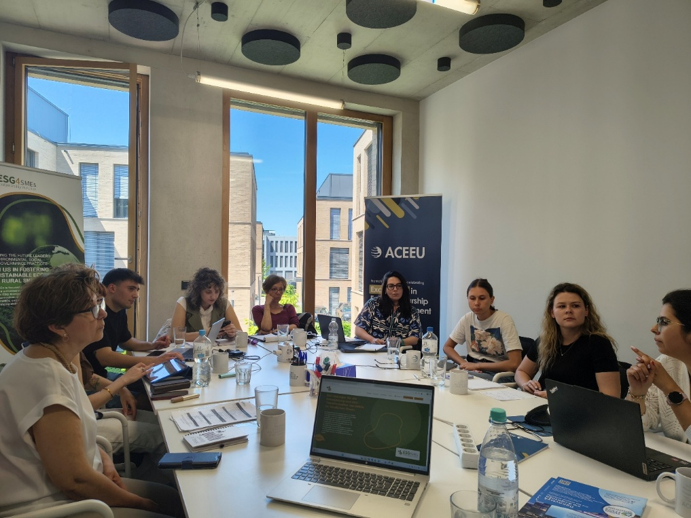
The meeting focused on reflecting on the project results and exchanging views on possible approaches to continue cooperation and activities in the field of sustainability beyond the project period.
The key project results include:
✅ a profile for ESG managers in small and medium-sized enterprises
✅ an ESG curriculum
✅ a modular, free ESG training course
✅ an interactive digital ESG learning game
✅ policy recommendations for decision-makers
The free ESG course offers a low-threshold introduction to ESG and sustainable transformation. It is aimed particularly at career starters and trainees with insight into business processes. The course comprises six flexible modules that can be completed individually or as a full course. Micro-learning units make it easier to integrate the course into everyday working life. Practical examples from the agri-food sector support the application of the content. The course was developed by seven project partners from five EU countries and is available in five languages.
The interactive ESG learning game conveys ESG principles in a clear and accessible way. In six missions, participants work through realistic company scenarios and make decisions with direct feedback. The game is linked to the modules of the ESG course, was developed internationally and is also available in five languages.
Further information is available on the project website: www.esg4smes.eu
Sustainability in Practice: 60 Sustainability Officers Exchanged Ideas in Steinfurt
Sustainability remains a strategic future topic for companies. This was demonstrated by an exchange meeting held on 23 April 2026 at FH Münster’s Technology Campus in Steinfurt. Around 60 sustainability officers from the district of Steinfurt and beyond came together to discuss ESG, sustainable business models and concrete ways to implement sustainability in everyday business practice.

The meeting was organised by Wirtschaftsförderungs- und Entwicklungsgesellschaft Steinfurt mbH (WESt) and the Accreditation Council for Entrepreneurial and Engaged Universities (ACEEU) as part of the EU project ESG4SMEs. Companies from various sectors were represented, including industry, services and consulting.
One important agenda item was the presentation of key results from the EU project ESG4SMEs by Prof. Dr. Thorsten Kliewe. The project aims to support small and medium-sized enterprises in Europe in integrating Environmental, Social and Governance principles into their day-to-day work. As part of the project, an online training course for sustainability officers and an app in the form of a simulation game were developed. In a virtual company environment, users can apply ESG principles, make decisions based on ESG data and understand their impact on business performance.
After the welcome by Christian Holterhues, WESt mbH, and Prof. Dr. Thorsten Kliewe, ACEEU, Prof. Dr. Florian Lüdeke-Freund, Professor of Corporate Sustainability at ESCP Business School, provided expert input on the future-oriented development of German business models. In his keynote speech, “Competitiveness and Resilience Despite Crisis”, he made clear that sustainability, business model transformation and entrepreneurial resilience are closely interconnected.
The presentation was based on a recent study by the Bertelsmann Stiftung. It shows that companies that strategically develop their business models not only strengthen their competitiveness, but also create important conditions for greater resilience and sustainability. Sustainability was therefore not framed as an additional task, but as part of a long-term viable corporate strategy.
The focus then shifted to moderated exchange rounds. At four topic tables, participants discussed regional networks and cooperation, the use of AI in sustainability management, internal sustainability communication and employee involvement, as well as practical tools and methods for getting started with sustainability management.
Dorothee Meier, B.A.U.M. Consult GmbH, Ursula Wermelt, energieland2050 e. V. of the district of Steinfurt, and Jan-Philipp Peperhowe, Circular Economy Region Münsterland, exchanged ideas with participants on existing and future networking opportunities. The focus was on the question of which formats companies interested in sustainability need in the region in order to share experiences, build cooperation and learn from one another. Among others, the ÖKOPROFIT Club, the energieland2050 regulars’ table, the focus groups in the Circular Economy Region Münsterland project and services offered by the Efficiency Agency NRW were presented.
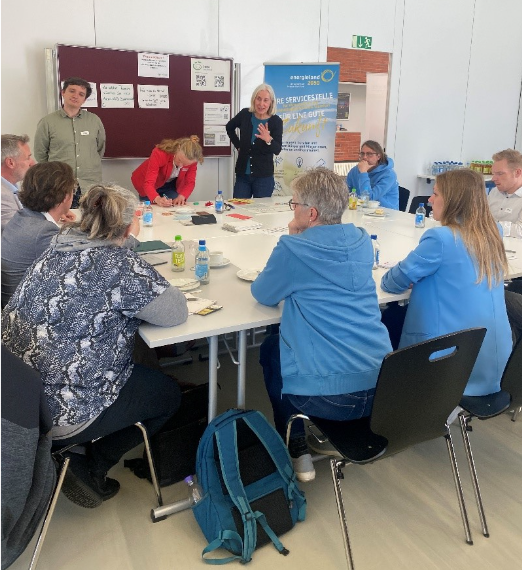
Christian Holterhues discussed the role of artificial intelligence in sustainability management with the participants. It became clear that AI can support analysis, structuring and wording, but does not replace employee involvement, personal dialogue and concrete implementation within the company. Data protection issues also continue to play an important role. In some companies, there is a desire to deliberately keep certain tasks in human hands for data protection reasons.

Tim Riedel presented the funded platform “Green Teams Network”. Green teams are groups of people who work together to promote greater sustainability in the workplace. The network supports green teams and their organisations through a platform for exchange, impact and shared learning, as well as through events, training and further offers.
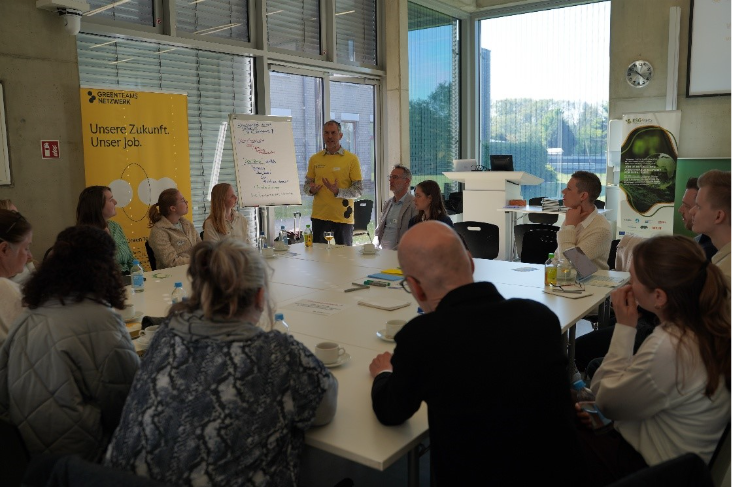
At another topic table, Prof. Dr. Thorsten Kliewe and Varvara Leinz, WESt mbH, gathered feedback on tools already in use, current challenges and specific support needs within the companies.
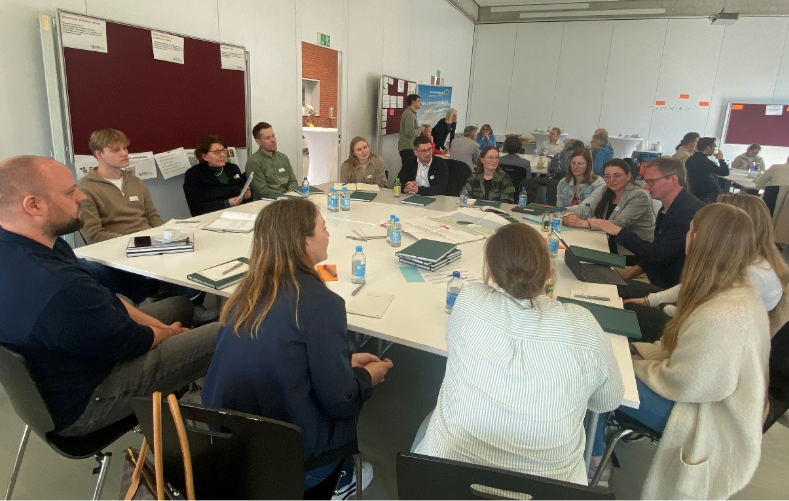
The discussions showed that the participating companies are at different starting points when it comes to ESG and sustainability. Accordingly, there was strong interest in orientation, regional exchange of experience and practical approaches to implementation.
To conclude, key findings from the exchange rounds were summarised. The conclusion: sustainable transformation succeeds above all when companies take a strategic approach, actively involve employees, make use of regional cooperation and rely on practical tools.
The materials presented during the event were made available to participants afterwards. Companies wishing to receive further information or network individually can contact WESt mbH and its partners.
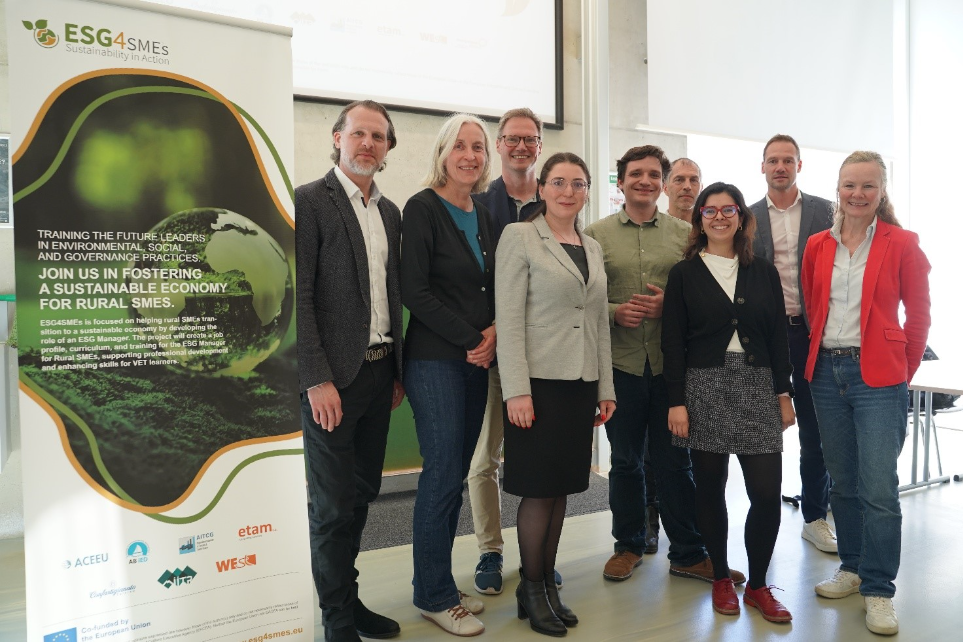
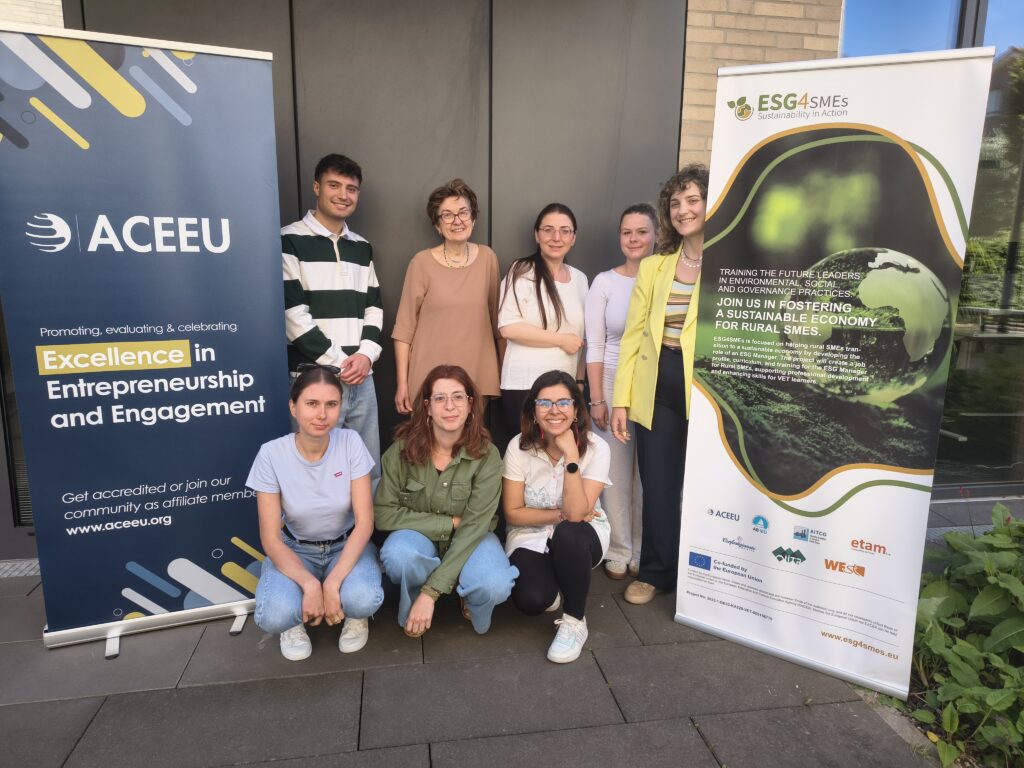
Group photo with organisers and speakers
The organisers and speakers of the event (from left): Prof. Dr. Florian Lüdeke-Freund (ESCP Business School), Dorothee Meier (B.A.U.M. Consult GmbH), Prof. Dr. Thorsten Kliewe (ACEEU), Varvara Leinz (WESt mbH), Jan-Philipp Peperhowe (Circular Economy Region Münsterland), Tim Riedel (planetgroups Support UG), Angela Hernandez (ACEEU), Christian Holterhues (WESt mbH) and Ursula Wermelt (energieland2050 e.V.).
ESG Event on Companies Share Insights on ESG Strategies and Learn About the EU Project ESG4SMEs
On 11 March 2026, more than 50 business representatives and multipliers from the Münsterland region participated in an online event to learn about practical ways to strategically embed sustainability in companies. Five regional companies shared how they integrate sustainability into their business strategies and daily operations.
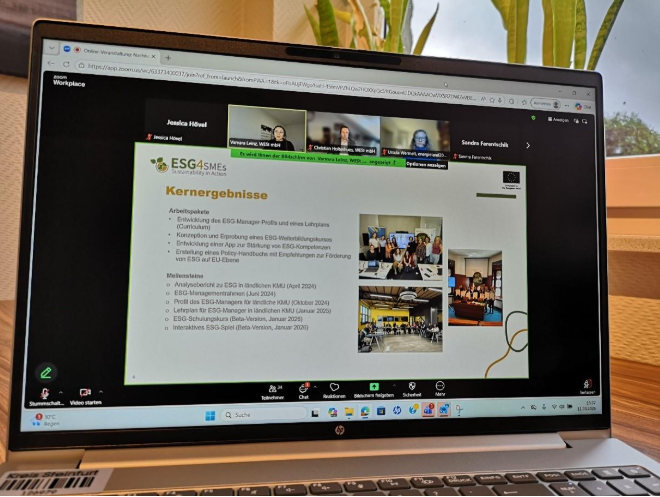
The event marked the first part of the final conference of the EU-funded project ESG4SMEs and was organized by WESt Kreis-Wirtschaftsförderung, the Accreditation Council for Entrepreneurial and Engaged Universities (ACEEU), and energieland2050 e. V.. The focus was on ESG case studies from various industries. In addition, results from the EU project ESG4SMEs were presented, including a modular ESG training course and an interactive digital learning game, designed to clearly convey ESG topics to small and medium-sized enterprises in rural areas.
Insights from ESG Practice Reports
- Heike Schürkötter from Salvus Mineralbrunnen GmbH in Emsdetten emphasized that sustainability is deeply embedded in the company culture: “Being ecological is in our DNA.” Salvus focuses on regional supply chains, short transport routes, and diverse social engagement in the region.
- Rike Kappler from cibaria BioVollkornBäckerei GmbH in Münster demonstrated how ecological, social, and economic actions can be integrated. The company sources most raw materials locally, works closely with agricultural partners, and regularly publishes a common good report. International responsibility is also considered, e.g., through direct cooperation with cocoa producers in Ghana to strengthen local value creation.
- Sandra Ferentschik of B&B Verpackungstechnik GmbH in Hopsten explained that sustainability affects both the company’s location and its products. Her central message: “Sustainability is a process driven by the people in the company.” She highlighted participation in the ÖKOPROFIT project as a particularly helpful foundation.
- Karoline Kröner from Kröner-Stärke GmbH in Ibbenbüren emphasized in an interview with Ursula Wermelt (energieland2050 e. V.) that sustainability is a core basis for business decisions. She also highlighted the societal responsibility of companies: “Our company is a microcosm – a mirror of society as a whole. Each of us can contribute in small ways to the bigger picture.” Key to success is gaining acceptance within the company and actively involving employees in change processes.
- Jessica Hövel of wedi GmbH also stressed that sustainability encompasses many perspectives and should be integrated early into existing processes. She emphasized involving different departments, actively using networks to benefit from exchanges with others, and focusing on pragmatism over perfection, building acceptance, engaging people, transparency, and good data.
Outlook
The event highlighted that sustainability in companies has many facets and that there is no single path. Companies in the Münsterland region are committed in diverse ways, often beyond legal requirements. By approaching sustainability step by step and collaboratively with employees, companies can develop viable solutions. Exchanging experiences with other local businesses can provide additional valuable insights.
🌱 Learn ESG in Practice – explore ESG4SMEs tools!
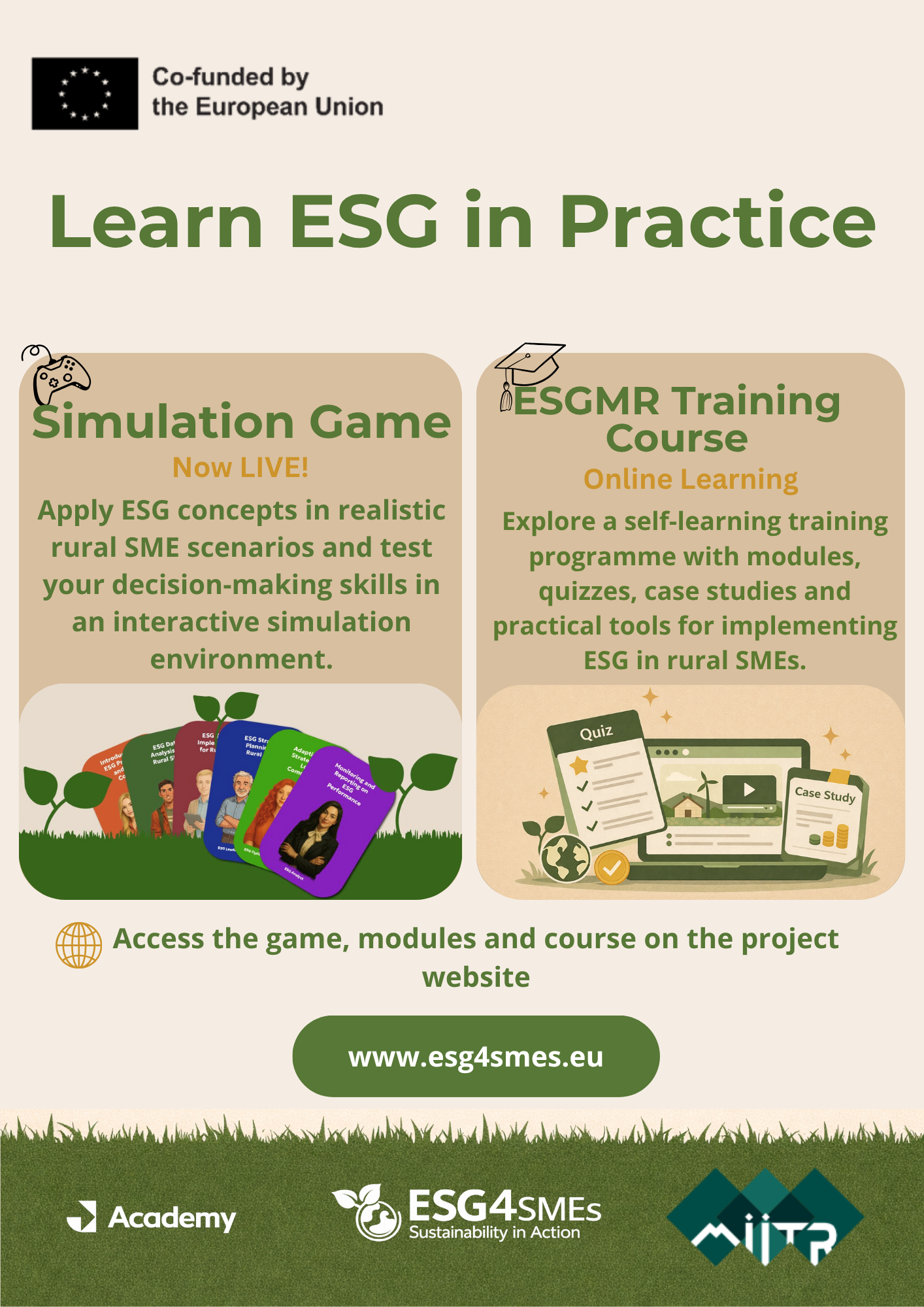
Discover ESG4SMEs Learning Resources 🌱
Learning about ESG does not have to be dry, complicated, or overwhelming. Within the ESG4SMEs project, we have developed two practical and engaging resources that make ESG learning more accessible, interactive, and relevant for rural SMEs: the Simulation Game 🎮 and the ESGMR Training Course 🎓.
Whether you are just starting to explore ESG or looking for practical ways to bring it into your business, these tools are here to support your journey.
🎮 Simulation Game – Learn by Doing
The ESG4SMEs Simulation Game invites you into a realistic rural SME environment, where ESG is not just theory – it becomes part of your decisions.
Through interactive scenarios, you can test how different choices affect your business, your community, and the environment. From managing resources to responding to sustainability challenges, the game helps you explore ESG in action in a way that is practical, immersive, and easy to understand.
💡 It is especially useful for SMEs that have little or no previous ESG experience, as it offers a safe space to experiment, learn from mistakes, and build confidence step by step.
🎓 ESGMR Training Course – Build Your Skills at Your Own Pace
Prefer a more structured learning path? The ESGMR Training Course is designed as a self-learning programme that guides you through the key building blocks of ESG in rural SMEs.
Inside, you will find:
- practical learning modules
- quizzes to test your understanding
- case studies from real-life contexts
- useful tools to support ESG implementation in practice
The course helps you move from the basics of ESG to more advanced topics such as strategy, monitoring, and reporting – all adapted to the realities of rural businesses.
🌾 Why These Resources Matter
Rural SMEs face unique challenges, but also unique opportunities. ESG can help businesses become more resilient, more competitive, and better prepared for the future. That is why these resources were created: to make ESG learning practical, relevant, and genuinely useful.
By combining interactive learning through the game and structured knowledge through the course, ESG4SMEs offers a learning experience that is both informative and hands-on.
👉 Start Exploring
All resources are freely available on the ESG4SMEs project website, so you can start learning, clicking, testing, and discovering right away.
Because sometimes the best way to understand ESG… is to try it for yourself. 🌍✨
Learning, Teaching, Training Activity (LTTA) of the EU Project ESG4SMEs in Münster
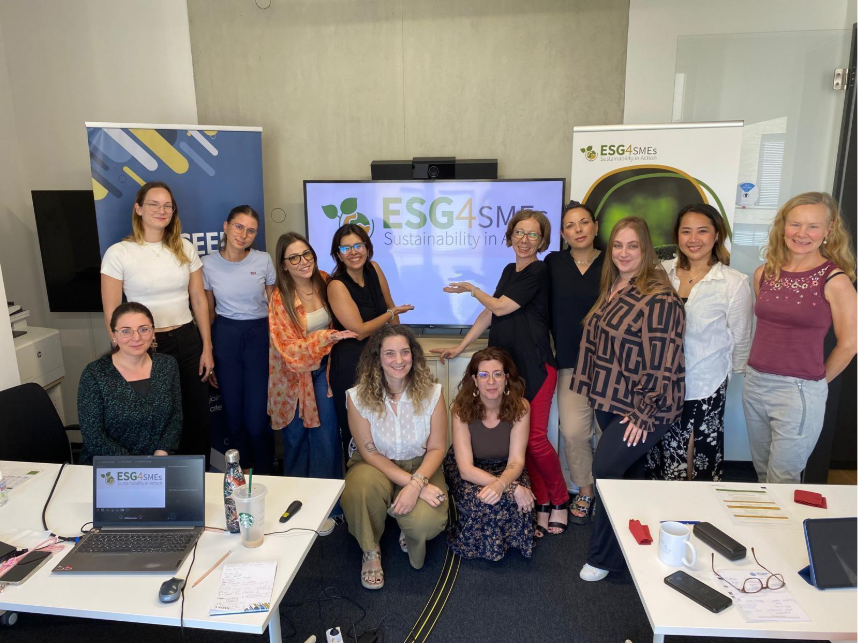
The EU project ESG4SMEs aims to support small and medium-sized enterprises (SMEs) across Europe in integrating Environmental, Social, and Governance (ESG) principles into their daily operations. From 22 to 24 July 2025, a LTTA was held at the lead partner ACEEU (Accreditation Council for Entrepreneurial and Engaged Universities) in Münster.
Meeting Focus Areas
Launched under the EU Erasmus+ program, the project places a particular focus on the agriculture and food sector and primarily supports rural companies in implementing sustainable practices. At the core of the project is the development of an online training course for sustainability officers. In addition, an online Mission Game is being created, In a virtual business environment, users can apply ESG principles in a gamified way, navigate real-life scenarios, make decisions based on ESG data, and experience the impact of these decisions on business performance. both open accessible resources.
Exchange and Best Practices
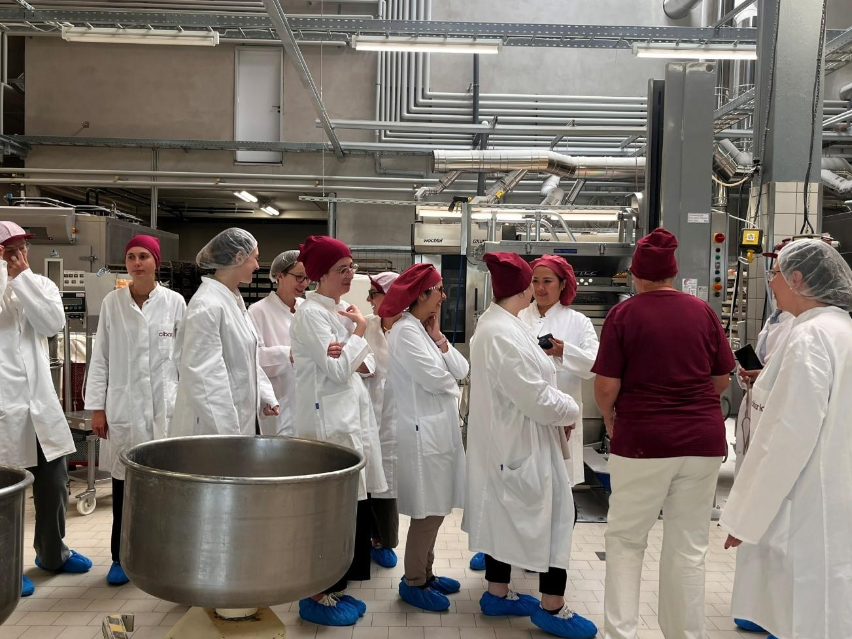
Representatives from Italy, Slovenia, Greece, Cyprus, and Germany attended the meeting in Münster. The program included lectures, guided tours, discussion rounds, and workshops.
Highlights of the three-day meeting:
- Ursula Wermelt from energiland2050 e.V. presented the services offered by the Office for Climate Protection and Sustainability for businesses and citizens in the Steinfurt district. This gave the international project partners the opportunity to learn about municipal strategies and approaches to sustainable development at the local level in Germany and to exchange ideas.
- Rike Kappler, founder and CEO of the organic bakery Cibaria, guided the European project group through the production process and provided insights into her company’s sustainable business philosophy.
- The initiative Fairteilbar from Münster conducted a workshop on food waste, demonstrating how individuals and organizations can reduce waste while making a positive contribution to the environment and society.
In addition, partners presented the current status of their work packages, including the development of the training modules and the collection of ESG best practices from their respective countries. From the Steinfurt district, WESt reported on the sustainability strategy of Confiserie Rabbel from Westerkappeln as a practical example of ESG implementation in rural agri-food sector companies.
Outlook
Once the training modules and mission game content are completed, the materials will be translated into the national languages of the partner countries and made publicly available through an online platform.
Partner Meeting in Salerno Sets the Course for the Second Half of the Project
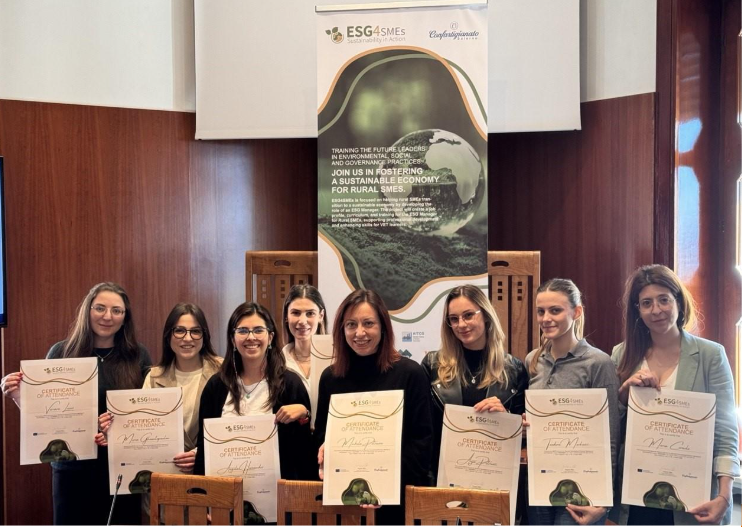
On 10–11 April 2025, the consortium of the EU project ESG4SMEs met in Salerno, Italy. The project involves seven partners from Germany, Italy, Slovenia, Greece, and Cyprus, including business initiatives, institutes, and industry associations. The project focuses on the development of a professional profile for ESG managers in small and medium-sized enterprises (SMEs) in rural regions. The goal is to support agri-food companies in systematically integrating ESG aspects into their business practices.
Background
“ESG” stands for Environmental, Social, and Governance. These three pillars are used to assess the sustainability and ethical impact of a company or organization.
Examples of measures and practices under the three ESG pillars:
Environmental: Managing environmental impact, protecting natural resources, addressing climate change
- Energy efficiency: Reducing energy consumption and CO₂ emissions
- Sustainable resource use: Using renewable resources, recycling, waste reduction
- Climate protection: Investing in renewable energy, reducing greenhouse gas emissions
Social: Relations with employees, suppliers, customers, and communities
- Working conditions: Fair wages, protection of workers’ rights
- Community engagement: Educational projects, donations, volunteering
- Diversity and inclusion: Promoting a diverse and inclusive corporate culture
Governance: Responsible management and oversight
- Corporate ethics: Transparency, anti-corruption, ethical standards
- Board structure: Independent and effective supervisory boards
- Risk management: Strategies for managing business risks
Benefits of Implementing ESG Practices
By integrating ESG practices, companies can improve access to financing, strengthen their market position, and gain competitive advantages. ESG implementation also builds trust with customers and partners, increases employee motivation and retention, ensures compliance with legal requirements, and enhances operational efficiency—for example, through energy savings, reduced resource consumption, and lower waste.
Project Progress
During the first half of the project, a baseline analysis of ESG practices was conducted in the partner countries. Based on this, the ESG manager profile and an ESG curriculum were developed. Currently, the partners are working on the development of a training course in ESG.